Type beat licensing explained through a hard VonOff1700 style Chicago drill instrumental
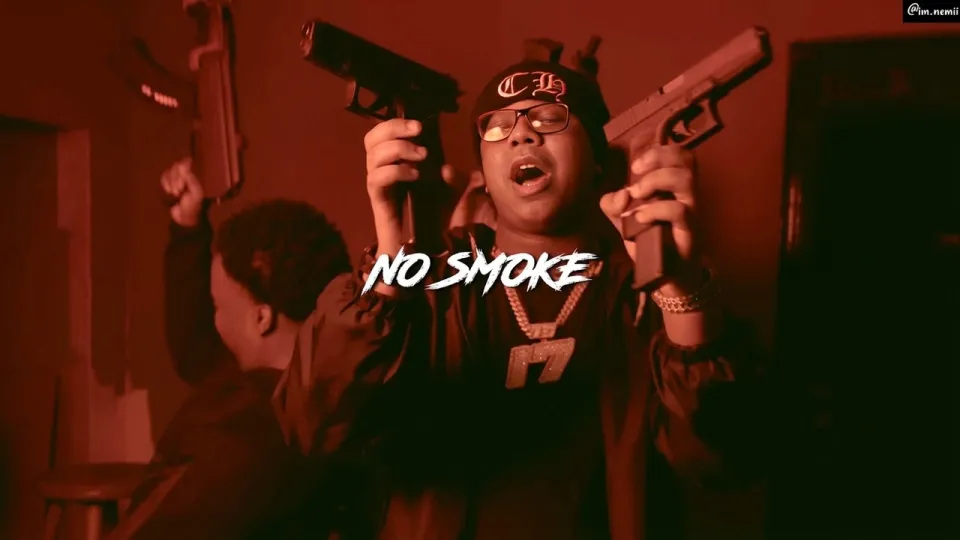
Video: [Hard] VonOff1700 Type Beat - “No Smoke” | Chicago Type Beat 2026
Need articles like this for your video? They help promote it on YouTube and Google — order them in the Telegram bot @sat_sit_bot. Articles with your video embedded are written and posted by the bot itself — on popular topical sites (no ads). Your first 50 articles are free.
· based on the channel Nemii
Key takeaways
- "No Smoke" is a Chicago drill instrumental produced by Nemii in the style of VonOff1700, Bloodhound Q50 and Screwly G.
- The beat is not free to release: an untagged license starts at https://bsta.rs/fCVYYX, with a Buy 2 Get 1 Free offer.
- A free tagged version can be downloaded through the main link https://bsta.rs/Hxl2S2.
- Custom beats and exclusives are handled through Instagram @im.nemii and beatbynemii@gmail.com; loops are not accepted by email.
- The full catalog sits at nemiiofficial.com, and coupon codes are posted on the producer's Instagram.
A type beat is an original instrumental written in the style of a specific artist so that a rapper can record over it and license it for release. "No Smoke" is exactly that: a hard Chicago drill type beat by the producer Nemii built in the lane of VonOff1700, with Bloodhound Q50 and Screwly G named as adjacent references. You can grab the tagged version through the free download and licensing page, then upgrade to an untagged file when the song is ready to go out.
What a VonOff1700 type beat actually is
A VonOff1700 type beat is a new instrumental that borrows the tempo, drum character and dark melodic mood of VonOff1700's Chicago drill records without using any of his vocals or copyrighted recordings. Producers build these from scratch, tag them with a producer watermark, and sell licenses so artists can legally distribute the finished song.
The style sits inside Chicago drill, the city's mutation of trap that spread worldwide in the 2010s. Its markers are consistent across the subgenre:
- A tempo cluster roughly between 130 and 145 BPM, often felt at half-time so the rapper can ride it in double-time bursts.
- Sliding 808 bass lines that carry the melody as much as the synth does.
- Sharp, clipped hi-hats and snare rolls that leave space between hits.
- Minor-key piano, bell or string loops, frequently pitched or filtered for a cold, reverb-heavy texture.
- Sparse arrangement: intro, loop-driven verse, a drop or switch for the hook, then out.
"No Smoke" follows that recipe and is tagged as a hard, dark Chicago drill type beat, which in practice means the low end is aggressive and the loop is meant to sit under an energetic, confrontational vocal rather than a melodic one.
How the "No Smoke" beat is structured for a rapper
A drill instrumental works best when the sections are obvious enough that an artist hears where the verse and hook go on the first listen. The producer's job is to make the loop hypnotic but leave pockets — short gaps in the drums — so the vocal can land punchlines without fighting the mix.
In practice, that means the beat gives you a clean count-in, a full loop for the verse, a variation or drop for the chorus, and a stripped-back section near the end for ad-libs or a guest verse. Because the file is delivered untagged on purchase, nothing beeps over your vocal takes in the final export.
Type beat licensing: what you pay for and what you get
A type beat license is a rental, not a sale of the instrumental itself; exclusivity costs more and is negotiated separately. Nemii's listing is direct about this: the beat is not free to release on streaming platforms, and a license must be purchased before distribution.
The practical breakdown of what the links give you:
- Tagged free download and license options — the entry point, useful for writing and demos.
- High quality untagged file, Buy 2 Get 1 Free — the version you record and release with.
- Instagram @im.nemii — custom beats, exclusives and coupon codes.
- beatbynemii@gmail.com — business contact; the producer explicitly asks that loops not be sent there.
- nemiiofficial.com — the full catalog of beats.
Before you release, read the license tier you bought: most type beat licenses cap stream counts and monetized video views, require producer credit in the title or description, and limit how many separate songs you can make from one instrumental. If a song starts to perform, upgrade the license rather than risk a takedown.
Common questions rappers raise about drill type beats
Most doubts around a hard Chicago drill type beat come down to three things: whether the sound is current, whether the price is worth it, and whether the beat is genuinely usable for a full song rather than a 30-second clip.
On relevance, a 2026-era drill instrumental is judged against what is charting now — the VonOff1700, Bloodhound Q50 and Screwly G lane — so the drums need modern clipping and the 808s need to move, not just sit. On price, the Buy 2 Get 1 Free bundle effectively cuts the per-beat cost by a third if you are building an EP. On usability, check the length and arrangement: a beat that runs under two minutes with no switch will force you to loop it, which is fine for freestyles but thin for a single.
A fourth, quieter concern is originality. A type beat is legal because it imitates a style, not a recording; using an artist's actual instrumental or a re-uploaded acapella is not. Keep your reference points as influences in the description, not as claims of collaboration.
How to record and release a track on this instrumental
Start by downloading the tagged version and writing to it, because the watermark forces you to build a vocal that stands without studio polish. Once the structure works, buy the untagged file, record at 24-bit with headroom around -6 dB on the vocal bus, and leave the beat's low end alone — drill 808s are already compressed and clipping them again muddies the whole mix.
For release, credit the producer in the metadata, register the song with your distributor using the license you purchased, and keep the receipt. If you plan a video, note the view caps in your license tier before you shoot. Artists who want a beat that matches their exact tempo or key can request a custom instrumental through the producer's Instagram rather than stretching an existing file.
All links from the video
- Free tagged download and licensing: https://bsta.rs/Hxl2S2
- Untagged high quality file, Buy 2 Get 1 Free: https://bsta.rs/fCVYYX
- Producer Instagram, custom beats and coupon codes: https://www.instagram.com/im.nemii/
- Full beat catalog: https://nemiiofficial.com
- Email for business, no loops: beatbynemii@gmail.com
Final word on picking a drill type beat
"No Smoke" is a straightforward proposition: a hard Chicago drill instrumental in the VonOff1700 mold, produced by Nemii, with a tagged version for writing and a paid untagged file for release. The value is in the arrangement and the low end, so test it with your own vocal before committing to a bundle. Nemii's channel is where the full breakdown of this beat lives, alongside the rest of the catalog and the licensing terms. When you are ready to record, start at the licensing and download page and pick the tier that matches your release plans.
Questions & answers
Can I release a song on a type beat for free?
No. A type beat is a copyrighted instrumental, and releasing it without a license can get your track taken down or claimed. The free download is a tagged version meant for writing and demos; distribution requires a purchased license, which is why the untagged file sits behind a paid link.
How much should I change a VonOff1700 type beat to make it my own?
You cannot change the instrumental itself, but you can change everything on top of it: your flow, cadence, ad-lib placement and vocal tone. The beat imitates a style, not a recording, so as long as you write original lyrics and do not use the artist's actual vocals, the song is yours under the license terms.
Does a type beat license let me shoot a music video?
Usually yes, but with a cap on monetized views depending on the tier. Check the license you bought before uploading, and upgrade if the video starts performing beyond the limit. Producer credit in the title or description is typically required.
Can I ask for a custom beat in this style instead?
Yes. Custom beats and exclusives are arranged directly with the producer through Instagram @im.nemii, and the same contact handles coupon codes. Note that loops are not accepted by email, so send requests rather than sample packs.
Source: [Hard] VonOff1700 Type Beat - “No Smoke” | Chicago Type Beat 2026 · Markdown version